MultiFrax for Scars: Can Laser Resurfacing Improve Their Appearance?
A scar can tell a story.
Maybe it came from surgery. Maybe a burn. Maybe years of acne. Maybe your skin changed after pregnancy or significant changes in your body and left behind stretch marks.
Whatever the story, you may still wish the scar were less noticeable.
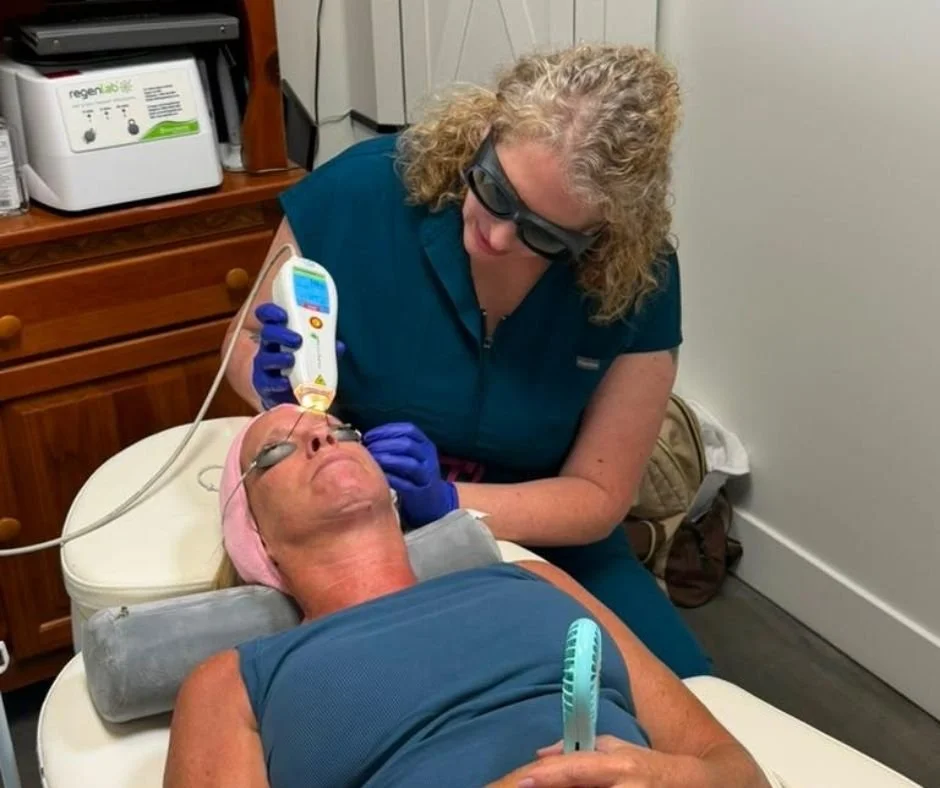
At Snake River Aesthetics in Nampa, Idaho, we now offer MultiFrax, a non-ablative fractional laser that can be used as part of a personalized plan to help reduce the appearance of certain scars and improve overall skin texture. MultiFrax's 1550 nm wavelength is designed to address textural irregularities, including acne scars and striae (stretch marks), while fractional laser treatments more broadly are used in scar management.
Your Skin Can Change Without Erasing Your Story
When we talk about improving a scar, the goal isn't necessarily to make your skin look completely untouched.
Scars are part of the way your body heals.
The goal of treatment is to reduce the appearance of the scar and improve the surrounding skin's texture and tone, so it may become less noticeable over time.
Laser treatments cannot completely erase a scar, and results depend on factors such as the type, location, age, and characteristics of the scar.
That's why a consultation matters.
What Types of Scars Can MultiFrax Help With?
At Snake River Aesthetics, we are especially interested in MultiFrax as an option for improving the appearance of:
Surgical scars
A surgical scar can remain visible long after the incision has healed.
Depending on the scar and where it is located, fractional laser treatment may be considered to help improve its appearance and texture.
Burn scars
Burn scars can have changes in texture and appearance that remain long after the original injury has healed.
Because scar treatment needs to be individualized, we'll first evaluate the scar and determine whether laser resurfacing is an appropriate option.
Stretch marks
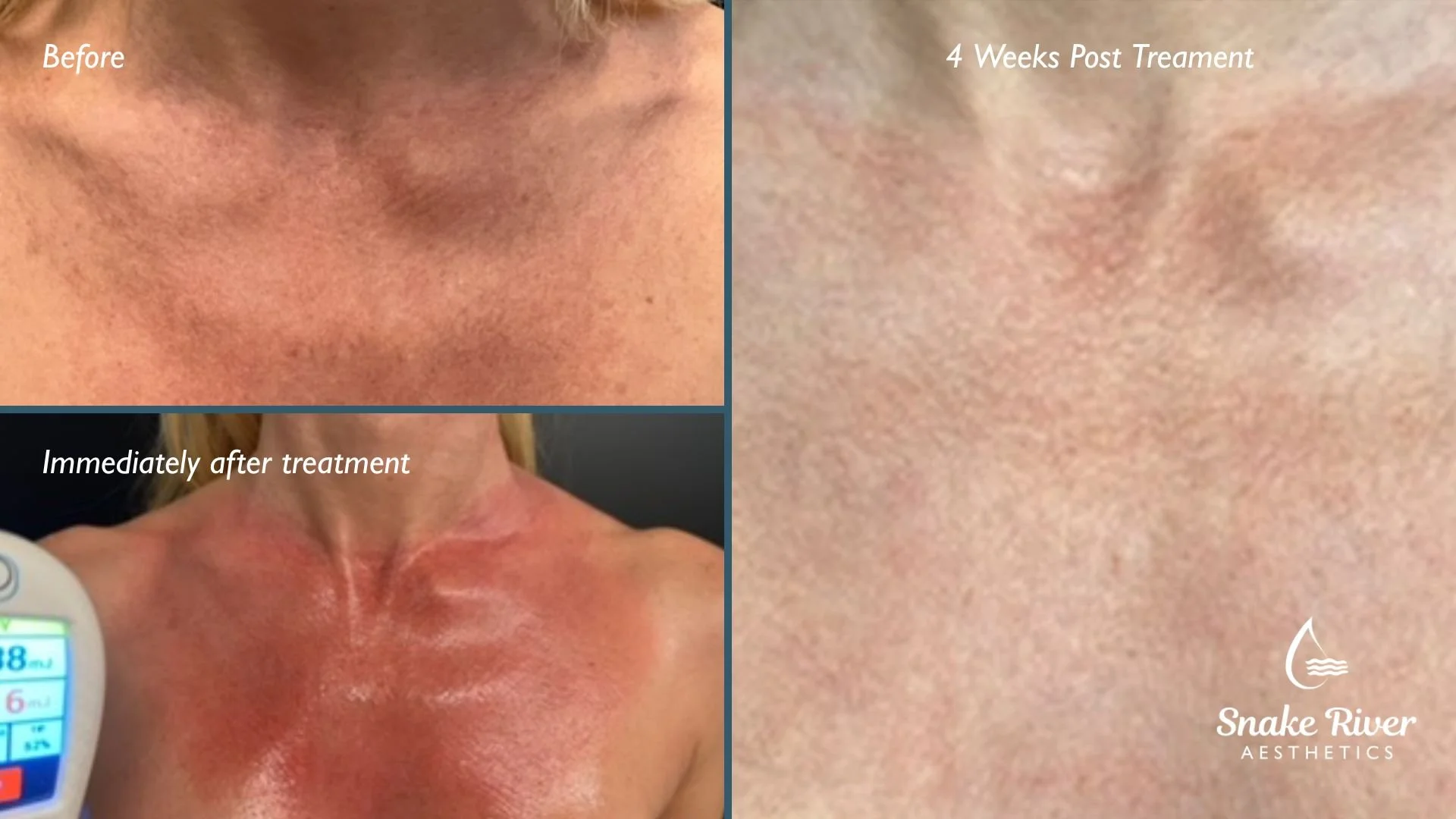
Stretch marks, also called striae, are a type of scar that can develop when the skin stretches or changes rapidly.
MultiFrax's 1550 nm wavelength is specifically designed to address textural irregularities including striae.
Treatment won't make stretch marks disappear, but it may help improve their appearance and texture.
Acne scars
Acne scars can range from shallow depressions to deeper textural changes.
MultiFrax's 1550 nm wavelength is designed to address acne scars and other textural irregularities.
For acne scarring, the right treatment depends heavily on the type of scar you have. Some scars may require a combination of approaches rather than laser treatment alone.
How Does MultiFrax Work?
MultiFrax uses fractional, non-ablative laser technology with 1550 nm and 1927 nm wavelengths.
The 1550 nm wavelength is designed to target deeper textural concerns, including acne scars and striae. The 1927 nm wavelength can address certain pigment-related concerns, including sun damage and dyschromia. The wavelengths can be used independently or together depending on the treatment plan.
Because the treatment is fractional, the laser creates controlled treatment zones rather than treating every part of the skin surface continuously.
This gives us the ability to customize treatment based on your skin and the concern we're addressing.
Why I Think of This as Regenerative Skin Treatment
I don't want you to think of MultiFrax as simply a treatment that makes your skin look different.
We're working with your skin's natural healing response.
Fractional resurfacing can stimulate the processes involved in collagen remodeling, which is one reason these treatments are used for certain textural concerns and scars. Results aren't necessarily immediate. Your skin needs time to heal and remodel after treatment.
That's why I prefer the word regenerative.
We're not trying to cover up the skin.
We're creating a controlled environment that encourages your skin to go through its natural repair and remodeling process.
How Many Treatments Will I Need?
Scar improvement is rarely a one-treatment conversation.
The number of treatments you may need depends on the scar, your skin, and your individual goals. The American Academy of Dermatology notes that multiple laser treatments may be recommended for certain scars, particularly when using non-ablative lasers.
For our MultiFrax treatment plan, 3 treatments are recommended, approximately 4 weeks apart.
Your individual plan may be adjusted based on your skin and how you respond to treatment.

What Can You Expect After Treatment?
Because MultiFrax is a non-ablative fractional laser, recovery can be less extensive than with some more aggressive resurfacing procedures. However, your skin may experience temporary redness, swelling, sensitivity, or changes in pigmentation after treatment.
Your recovery will depend on the treatment settings, the area being treated, and your individual skin.
And proper aftercare matters.
Sun protection and following your personalized post-treatment instructions are important parts of the healing process.
You Don't Have to "Fix" Your Scar
This is something I always want my patients to remember.
You don't have to dislike your scar to want to improve its appearance.
You can be grateful for what your body has been through and still want your skin to look different.
You can love your body and want to feel more comfortable in your skin.
Both things can be true.
At Snake River Aesthetics, my approach is to create a treatment plan around your skin, your goals, and your comfort level rather than promising to erase something your body has already worked hard to heal.
Curious If MultiFrax Could Help Your Scar?
If you have a surgical scar, burn scar, stretch marks, or acne scars that you'd like to make less noticeable, let's talk about your options.
Schedule a MultiFrax consultation at Snake River Aesthetics in Nampa, Idaho so we can evaluate your skin and determine whether this regenerative treatment is appropriate for you.
MultiFrax introductory offer: Through September 30, 2026, receive your 3rd treatment free when you purchase 2 treatments. Three treatments are recommended approximately 4 weeks apart. A consultation is required to determine whether MultiFrax is right for you.
Your skin doesn't have to be perfect. It just deserves thoughtful care.